
Most creators do not have a content problem. They have a systems problem. Without clean digital infrastructure, even the most talented professionals struggle to monetize their audience effectively. According to recent industry analyses on creator economy growth, the average creator spends over 20 hours per week on administrative tasks rather than content creation. This operational drag directly impacts revenue potential and brand scalability. To build a serious brand, you must transition from scattered tools to a cohesive backend engine. (BlackTierOps Backend systems for)
Audit and Organize Your Brand Infrastructure
The foundation of effective asset management begins with a comprehensive audit. You must review your current brand, niche, content, and offers to identify structural weaknesses. This process involves cleaning up the structure and simplifying the flow of information. When your links, files, and offers are spread across multiple disconnected platforms, customer access becomes fragmented.
Organizing your brand requires identifying what needs to be built versus what can be optimized. A clear audit reveals the gaps in your monetization path. It highlights where attention is lost and where revenue leaks occur. By mapping out your current ecosystem, you create a blueprint for a unified digital presence. This step is critical for establishing a professional foundation that supports scaling.
Consider the difference between a chaotic workspace and a streamlined office. In a chaotic workspace, finding a single document takes minutes. In a streamlined office, every file has a designated place. Your digital assets require the same level of intentional organization. This clarity allows you to focus on creation rather than administration.
Structuring Digital Product Infrastructure
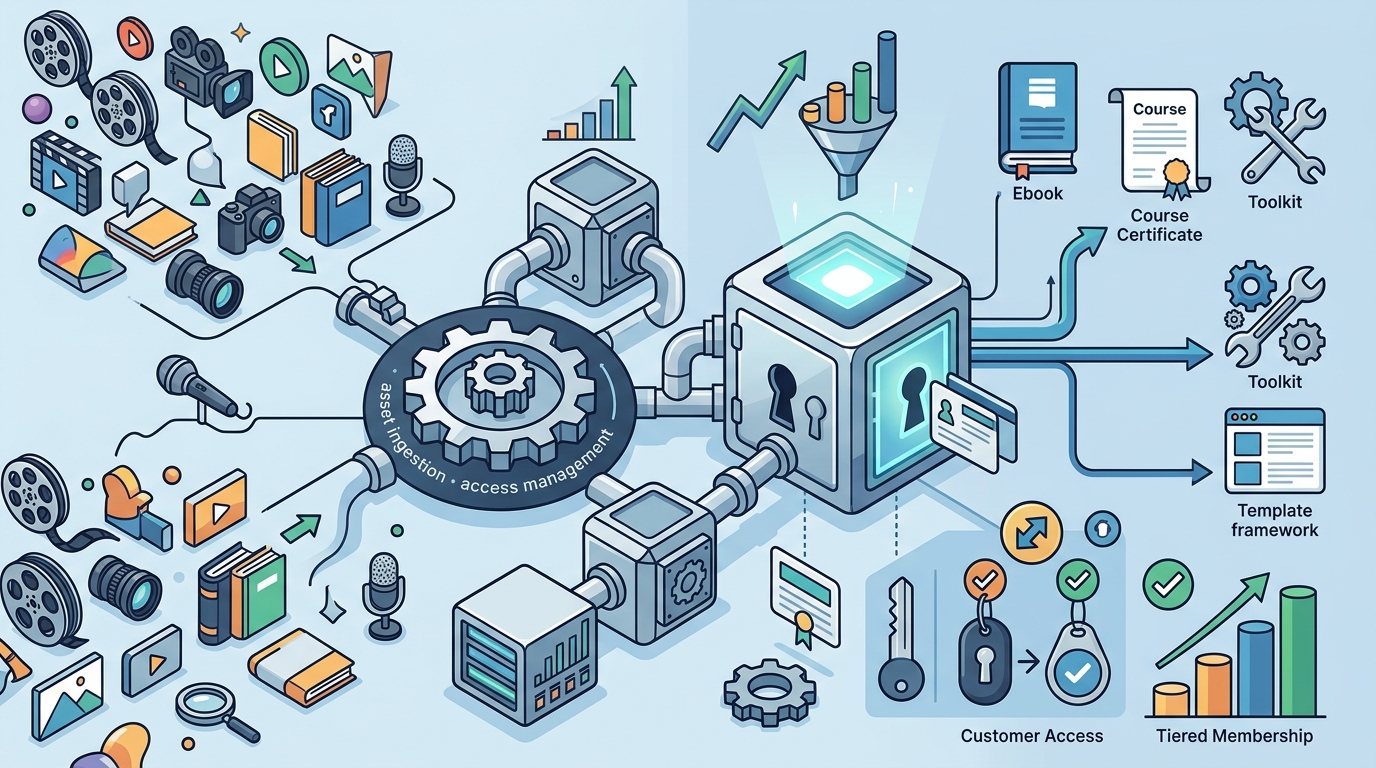
Digital product infrastructure is the organized delivery system for your assets and customer experience. It ensures that launches feel effortless for both you and your audience. This involves structuring your offers, digital products, and monetization flow into one cohesive engine. When these elements are disconnected, the customer journey becomes confusing and prone to drop-offs.
Effective infrastructure includes secure access controls and seamless delivery mechanisms. Customers expect instant access to purchased content without friction. This requires a backend that handles authentication, file distribution, and user management automatically. By centralizing these functions, you reduce support tickets and increase customer satisfaction.
Furthermore, a robust digital product infrastructure supports scalability. As your audience grows, your systems must handle increased traffic and transaction volumes without degradation. This reliability builds trust and encourages repeat purchases. It transforms your digital products from static files into dynamic revenue generators.
Streamlining Backend Operations and Automation
Backend operations setup is the process of streamlining workflows, automations, and tools to remove operational chaos. This involves connecting your CRM, email marketing, and payment processors into a unified system. When these tools communicate effectively, data flows seamlessly from lead to customer.
Automation is key to maintaining consistency in customer access. Automated onboarding sequences ensure that new customers receive their assets immediately after purchase. This instant gratification enhances the perceived value of your offerings. It also frees up your time to focus on high-level strategy and content creation.
Regular maintenance of these backend systems is essential. Technology evolves rapidly, and your infrastructure must adapt to new security standards and user expectations. Periodic reviews of your automation workflows help identify inefficiencies and opportunities for improvement. This proactive approach keeps your operations lean and effective.
Clarifying Brand and Offer Positioning
Brand and offer positioning involves clarifying your messaging and positioning your offer so it reads professional from the first touch. This is not just about marketing; it is about the underlying structure that supports your brand promise. If your backend systems are disorganized, your brand will appear unprofessional regardless of your marketing efforts.
Consistent branding across all digital touchpoints reinforces trust. This includes your website, email communications, and digital product interfaces. Each element should reflect your brand's values and aesthetic. This consistency creates a cohesive experience that resonates with your audience.
Positioning also involves understanding your target audience's needs. Your digital assets should be organized in a way that makes them easy to find and use. This user-centric approach enhances the overall customer experience. It demonstrates that you value their time and convenience.
Comparing Asset Management Approaches
Understanding the differences between various asset management approaches helps in selecting the right strategy for your brand. Below is a comparison of common methods used by creators.
| Approach | Pros | Cons | Best For |
|---|---|---|---|
| Manual File Sharing | Low initial cost | High administrative burden | Very small audiences |
| Disconnected Tools | Flexibility in tool choice | Data silos and inefficiency | Developers with technical skills |
| Integrated Backend Systems | Scalability and automation | Higher setup complexity | Scaling creators and brands |
As shown in the table, integrated backend systems offer the most significant advantages for scaling. While the initial setup may be more complex, the long-term benefits in efficiency and revenue potential are substantial. This approach aligns with the goal of building a serious brand.
Key Takeaways for Creator Success
- Audit First: Always start with a comprehensive audit to identify structural weaknesses in your current backend.
- Centralize Assets: Use a unified system for digital product delivery to ensure seamless customer access.
- Automate Workflows: Implement automation for onboarding and file distribution to reduce manual effort.
- Clarify Positioning: Ensure your brand messaging aligns with the professionalism of your backend systems.
- Scale with Systems: Choose infrastructure that grows with your audience to maintain performance and reliability.
- Monitor Metrics: Regularly review operational metrics to identify areas for improvement and optimization.
- Focus on UX: Prioritize user experience in asset organization to enhance customer satisfaction and retention.
Frequently Asked Questions
Who is this for?
This approach is for creators who are ready to scale their brand through clean digital infrastructure and backend systems. It is ideal for those who have an audience but lack a structured monetization path.
Do I need a big audience?
No, you do not need a massive audience to benefit from organized backend systems. Even small audiences require professional infrastructure to build trust and facilitate seamless transactions.
Do I need to be an expert?
You do not need to be a technical expert. The goal is to build systems that work for you, allowing you to stay in your creative zone while the backend handles the operations.
What does the shadow operator actually do?
A shadow operator or backend specialist manages the operational chaos behind the scenes. They organize workflows, set up automations, and ensure that your digital assets are delivered efficiently to customers.
How does the partnership work?
The partnership typically begins with an audit and organization phase. This is followed by building the necessary systems and launching them for your use. It is a collaborative process aimed at creating a sustainable revenue engine.
What kind of creator is the best fit?
The best fit is a creator who values structure and professionalism. If you are tired of scattered tools and inconsistent operations, this approach is designed to bring clarity and efficiency to your business.
What if I already have products or offers?
If you already have products, the focus shifts to optimizing their delivery and integration. We review your existing offers and streamline their backend to improve customer experience and scalability.
What makes this different from hiring an agency?
Unlike traditional agencies that may focus on marketing, this approach focuses on the foundational backend systems. It builds the engine that powers your brand, ensuring long-term operational health and revenue predictability.
Start Your Build
You have built the audience. You have earned the trust. Now it is time to turn that into predictable revenue. The worst case is that you have a 30-minute conversation and your business looks the same tomorrow. The best case is that you gain a business partner who builds the revenue engine while you stay in your creative zone.
Ready to turn your audience into a real business? Book a Free 15-min Demo today. No commitment. Just clarity. Let us help you organize, monetize, and scale through clean digital infrastructure.