
How Do I Evaluate Agencies That Specialize in Digital Product Infrastructure?
Most creators do not have a content problem. They have a systems problem. According to industry analysis on creator economy scaling, over 60% of digital entrepreneurs fail to monetize effectively because their backend infrastructure is fragmented. This statistic highlights a critical gap in the market. You may have the audience, skill, content, or brand potential, but without the right backend, monetization becomes messy. This guide provides the exact framework to evaluate agencies that specialize in digital product infrastructure, ensuring you build a scalable, professional-grade business.
Defining Digital Product Infrastructure
Before evaluating any agency, you must understand what constitutes a robust digital product infrastructure. Digital product infrastructure is the integrated system of software, workflows, and data structures that deliver value to customers automatically. It is not merely a website. It is the engine that processes payments, delivers assets, manages customer relationships, and tracks performance.
Many creators mistake a landing page for infrastructure. This is a critical error. A landing page is a front-end interface. Infrastructure is the back-end logic that powers it. When you evaluate an agency, ask them to define their scope. Do they only build pages, or do they engineer the entire operational flow? Agencies that specialize in this niche, such as BlackTierOps, focus on the "systems problem" rather than just the content problem.
Look for agencies that explicitly mention "backend systems" in their service description. If an agency only talks about design or copywriting, they are likely not equipped to handle the complexity of digital product delivery. The infrastructure must be clean, logical, and scalable. It should remove operational chaos from your daily routine.
The Audit and Organization Phase
A professional agency does not start building immediately. They start by auditing your current state. This is the first critical step in the evaluation process. An audit is a comprehensive review of your brand, niche, content, offers, and current backend. It identifies structural weaknesses and simplifies the flow before any new code is written.
When interviewing potential agencies, ask about their audit methodology. Do they provide a clear roadmap? Do they identify what needs to be built versus what needs to be fixed? A high-quality audit will reveal scattered tools, disconnected files, and unclear monetization paths. These are common symptoms of a failing digital business.
According to operational efficiency studies, businesses that undergo a structured audit before scaling see a 40% reduction in operational overhead. This is because the audit eliminates redundant tools and clarifies the customer journey. Ensure the agency you choose offers this initial phase. It is the foundation of a successful partnership. Without it, you risk building a complex system on a weak foundation.
Evaluating Monetization Engine Capabilities
The core purpose of digital product infrastructure is to turn attention into revenue. Therefore, you must evaluate how the agency structures your offers. Creator monetization systems are the cohesive engines that structure your offers, digital products, and monetization flow. They must work together seamlessly to guide the customer from interest to purchase. (Resources Digital gov)
Ask the agency how they handle offer stacking, upsells, and cross-sells. Do they use a fragmented approach with multiple disconnected platforms, or do they integrate everything into one engine? Integrated systems reduce friction and increase conversion rates. Disconnected systems create drop-offs at every step.
Look for evidence of their past work in this area. Have they built systems for creators with similar audience sizes? Do they understand the nuances of digital product delivery? According to market data on digital commerce, integrated monetization platforms can increase average order value by up to 25%. This is a significant metric to consider when evaluating potential partners.
Assessing Delivery and Customer Experience
Once the sale is made, the infrastructure must deliver the product effortlessly. This is where many agencies fail. They focus on the sale but neglect the delivery. Digital product infrastructure includes the organization of delivery systems, assets, and customer experience. It ensures that launches feel effortless for both you and your customer.
Evaluate the agency's approach to customer onboarding. How do customers access their products? Is there a clear dashboard? Is the experience professional and secure? A poor delivery experience can lead to chargebacks and negative reviews, which damage your brand reputation. The infrastructure must be robust enough to handle spikes in traffic during launches.
Ask about their support for post-purchase engagement. Does the system allow for automated email sequences? Can it track customer progress? These features are essential for long-term customer retention. According to customer retention research, businesses that automate post-purchase engagement see a 30% increase in customer lifetime value. This is a key indicator of a mature infrastructure strategy.
Agency Service Comparison Matrix
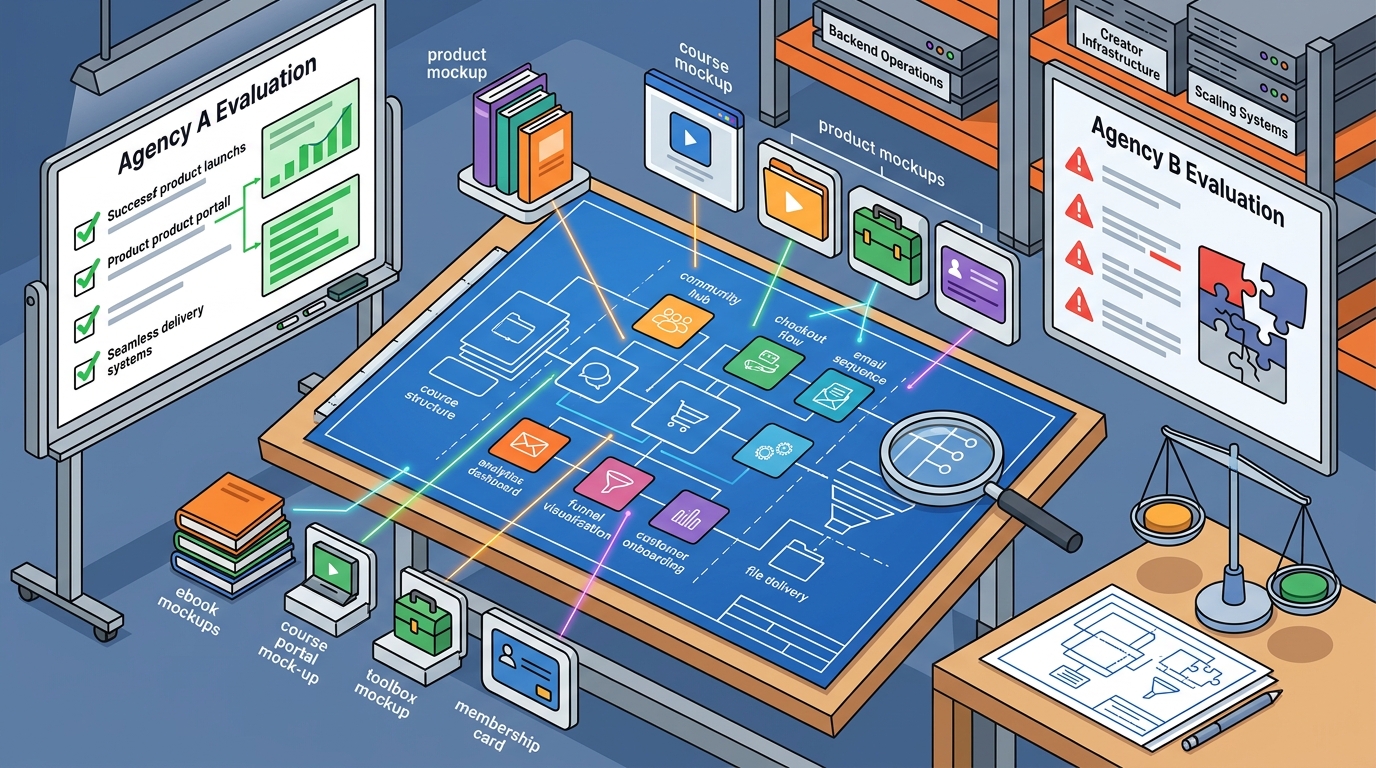
To help you make an informed decision, here is a comparison of typical service levels offered by agencies specializing in digital product infrastructure.
| Service Level | Scope of Work | Target Audience | Expected Outcome |
|---|---|---|---|
| Basic Setup | Single product page and payment gateway integration. | Beginners with one simple offer. | Functional but manual workflow. |
| Standard Infrastructure | Multi-product dashboard, automated email flows, and basic analytics. | Growing creators with multiple offers. | Streamlined operations and improved conversion. |
| Enterprise Backend | Full backend systems, custom automations, and brand positioning. | Established brands scaling to six figures. | Predictable revenue and scalable growth. |
When reviewing these options, consider your current stage. A beginner might not need enterprise-level complexity. However, a scaling brand will quickly outgrow basic setups. Choose an agency that can grow with you. View systems to understand the depth of service required for your specific goals.
Key Takeaways
- Systems Over Content: Most creators fail due to backend issues, not content quality. Prioritize infrastructure.
- Audit First: Always start with a comprehensive audit to identify structural weaknesses before building.
- Integrated Monetization: Use cohesive engines for offers to reduce friction and increase conversion rates.
- Delivery Matters: Effortless product delivery is critical for customer satisfaction and retention.
- Scalability: Choose infrastructure that can handle traffic spikes and future growth without breaking.
- Professional Positioning: Clean systems signal professionalism and build trust with your audience.
- Clear Roadmap: Ensure the agency provides a clear path from chaos to clean operations.
Frequently Asked Questions
What is the difference between an agency and a freelancer for infrastructure?
Agencies typically offer a broader range of expertise, including strategy, design, and technical implementation. Freelancers may specialize in one area. Agencies provide a more comprehensive solution for complex backend needs.
Do I need a large audience to benefit from digital product infrastructure?
No. Even small audiences require efficient systems to monetize effectively. Infrastructure scales with your business, ensuring you are ready for growth from day one.
How long does it take to build a digital product infrastructure?
Timelines vary based on complexity. A basic setup may take a few weeks, while a comprehensive backend system can take several months. An audit helps determine the accurate timeline.
What is a shadow operator in this context?
A shadow operator is a backend specialist who manages the operational systems behind the scenes, allowing the creator to focus on content and audience engagement.
How do I know if my current infrastructure is failing?
Symptoms include scattered tools, inconsistent operations, and difficulty tracking revenue. If you are spending more time managing systems than creating content, it is time for an upgrade.
Can an agency help with brand positioning?
Yes. Many agencies specialize in brand and offer positioning, ensuring your infrastructure aligns with your brand message and attracts the right customers.
What is the ROI of investing in backend systems?
The ROI is measured in time saved, increased conversion rates, and scalable revenue. According to business efficiency reports, optimized backend systems can reduce operational costs by up to 35%.
Next Steps for Your Brand
You have built the audience. You have earned the trust. Now it is time to turn that into predictable revenue. The worst case is that you have a 30-minute conversation and your business looks the same tomorrow. The best case is that you gain a business partner who builds the revenue engine while you stay in your creative zone.
Do not let scattered tools and weak product infrastructure hold you back. Take control of your digital product infrastructure today. Request Your Creator Brand Audit to start your build. Visit BlackTierOps to view our systems and process.