
How to Evaluate Agencies That Specialize in Digital Product Infrastructure
Most creators do not have a content problem. They have a systems problem. You may have the audience, skill, content, or brand potential, but without the right backend, monetization becomes messy. According to industry data on creator economy growth, the average revenue for successful digital product businesses relies heavily on operational efficiency rather than just traffic volume. This guide provides the exact framework to evaluate agencies that specialize in digital product infrastructure. (BlackTierOps Backend systems for)
The Audit and Organization Phase
Before committing to a long-term contract, you must understand how an agency approaches the initial state of your business. A high-quality agency does not assume your current setup is viable. They start with a rigorous audit. This process involves reviewing your brand, niche, content, offers, and current backend. The goal is to clean up the structure, simplify the flow, and identify what needs to be built from scratch.
When evaluating potential partners, ask specifically about their audit methodology. Do they provide a written report? Do they map out your current customer journey? According to operational best practices for scaling digital businesses, a lack of initial diagnosis often leads to wasted budget on tools that do not integrate well. Look for agencies that prioritize organizing your brand before building new systems. This ensures that the foundation is solid before adding complexity.
Consider the scope of their organizational work. They should identify scattered tools, unclear monetization paths, and weak product infrastructure. If an agency skips this step and immediately proposes a tech stack, they are likely selling you a solution rather than solving your problem. A proper audit reveals the disconnect between your attention and your revenue.
Evaluating Monetization Engine Capabilities
The core value of a specialized agency lies in their ability to structure your offers into a cohesive engine. Digital product infrastructure is not just about hosting files. It is about creating a predictable revenue stream. You need to evaluate how they plan to structure your offers, digital products, and monetization flow.
Ask the agency to demonstrate how they turn attention into structured revenue. Do they have a framework for tiered pricing? Do they understand the psychology of upsells and downsells in a digital context? According to market analysis of the creator economy, businesses with structured monetization flows see significantly higher customer lifetime value. An agency that cannot articulate this flow is not specialized enough for your needs.
Look for evidence of monetization strategy in their portfolio. Have they helped other creators move from random content to consistent sales? The difference between a generalist marketing agency and a specialized infrastructure agency is the focus on the backend engine. Generalists focus on traffic. Specialists focus on the conversion and delivery mechanism that captures that traffic.
Digital Product Infrastructure Standards
Digital product infrastructure refers to the organized delivery systems, assets, and customer experience that make launches feel effortless. When evaluating an agency, you must assess their technical proficiency in this area. This includes file organization, access control, and customer onboarding.
Ask about their approach to digital product support. How do they handle customer inquiries related to access? Do they build automated email sequences for delivery? According to consumer behavior studies, the first 24 hours after purchase are critical for reducing refund rates. An agency that builds a seamless onboarding experience directly impacts your bottom line by reducing churn.
Examine their tool agnosticism. The best agencies are not tied to a single platform. They choose the right tools for your specific needs, whether that is a custom dashboard, a membership platform, or a hybrid approach. They should be able to explain why they recommend a specific stack based on your scale and technical comfort level. Avoid agencies that force a one-size-fits-all template onto your unique brand.
Backend Operations and Automation
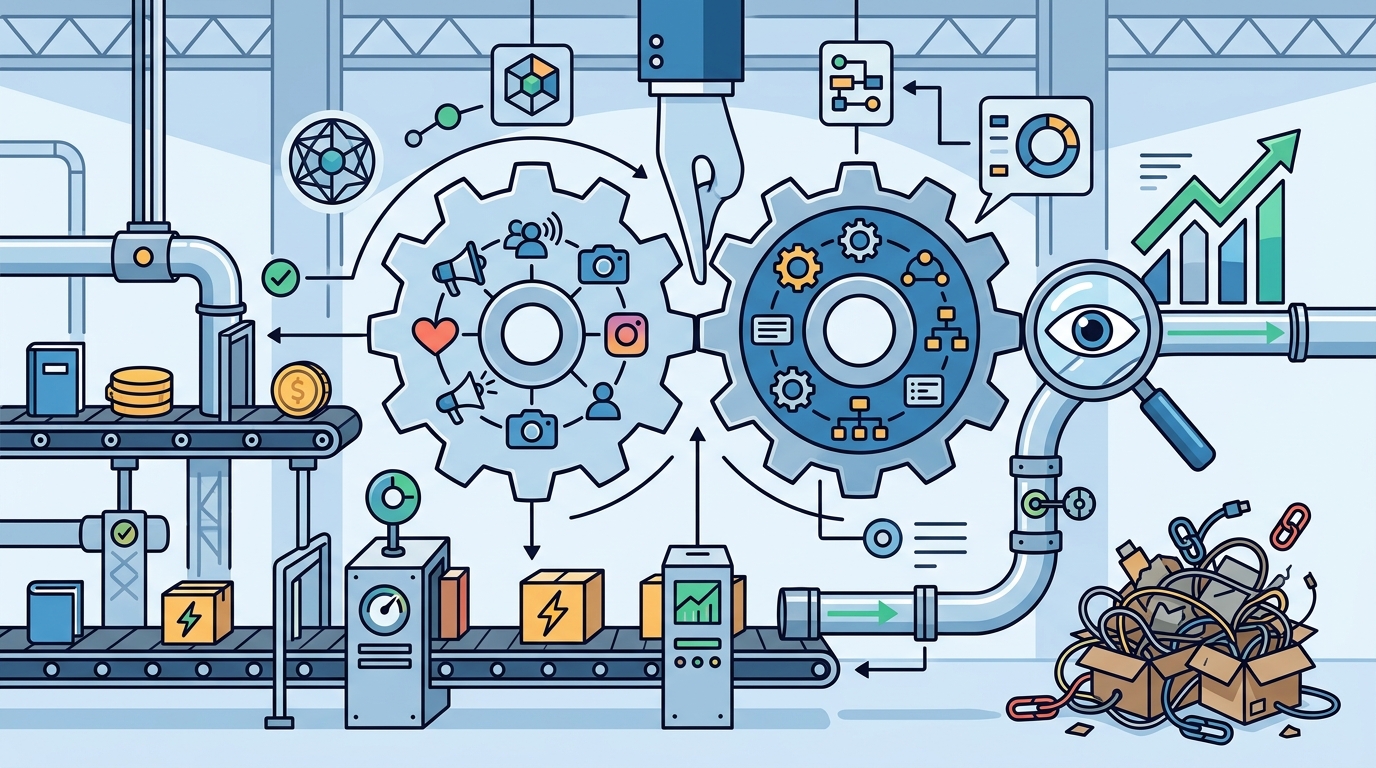
Backend operations setup is the invisible engine that keeps your business running. This involves streamlining workflows, automations, and tools to remove operational chaos. When you evaluate an agency, you need to understand their depth in automation. Do they merely connect two apps, or do they design complex logic flows?
Ask for examples of backend operations setup they have implemented. Have they automated invoice generation? Do they manage client onboarding workflows? According to operational efficiency reports, automating repetitive tasks can save creators dozens of hours per month. This time can then be reinvested into content creation or product development. An agency that focuses on backend operations is investing in your long-term scalability.
Consider the reliability of their systems. Do they have protocols for error handling? What happens when an automation fails? A specialized agency will have robust monitoring and alerting systems in place. They treat your backend as critical infrastructure, not an afterthought. This level of care is essential for maintaining trust with your audience.
Brand and Offer Positioning
Technical infrastructure must align with your brand identity. Brand and offer positioning involves clarifying messaging and positioning your offer so it reads professional from the first touch. An agency that ignores this aspect will build a functional but soulless system.
Evaluate their copywriting and design capabilities. Do they understand your voice? Can they translate your expertise into clear, compelling offers? According to branding research, consistent messaging across all touchpoints increases brand recognition and trust. Your digital product infrastructure should reflect your brand values, from the landing page design to the confirmation emails.
Look for agencies that offer brand and offer positioning as part of their service. This ensures that your technical setup supports your marketing goals. They should help you clarify your unique value proposition and ensure that your digital products solve specific problems for your audience. This alignment is crucial for conversion rates and customer satisfaction.
Agency Service Comparison Matrix
To help you make an informed decision, here is a comparison of typical service levels offered by different types of providers in the digital product space.
| Service Area | Generalist Agency | Specialized Infrastructure Agency | DIY / No-Code Tools |
|---|---|---|---|
| Audit & Organization | Minimal or none | Comprehensive deep-dive | Self-guided only |
| Monetization Strategy | Focus on traffic acquisition | Structured revenue engines | Template-based only |
| Backend Automation | Basic integrations | Complex workflow logic | Limited by platform |
| Brand Alignment | Generic templates | Custom positioning | Highly customizable |
| Scalability | Low to Medium | High and sustainable | Variable |
Key Takeaways
- Audit First: Always start with a comprehensive audit to identify scattered tools and weak infrastructure before building new systems.
- Monetization Focus: Choose agencies that structure offers into a cohesive engine rather than just focusing on traffic generation.
- Technical Depth: Evaluate their ability to handle complex backend operations and automation logic, not just basic integrations.
- Brand Integration: Ensure your digital product infrastructure aligns with your brand positioning for a professional customer experience.
- Scalability: Prioritize systems that can grow with your audience, avoiding rigid templates that limit future expansion.
- Support Structure: Look for clear protocols on digital product support and customer onboarding to reduce churn.
- Operational Efficiency: Automation should save you time, allowing you to focus on content and creativity.
Frequently Asked Questions
What is digital product infrastructure?
Digital product infrastructure is the organized delivery systems, assets, and customer experience that make launching and selling digital products effortless and scalable.
Why do creators need specialized backend systems?
Creators need specialized backend systems to organize, monetize, and scale their business by removing operational chaos and creating a clear path from attention to revenue.
How does an agency audit help my business?
An agency audit helps by reviewing your brand, niche, content, and current backend to clean up the structure, simplify the flow, and identify what needs to be built.
What is the difference between an agency and a consultant?
An agency typically provides a full suite of services including strategy, build, and launch support, whereas a consultant often provides advice without executing the technical build.
Can I scale my digital products with the right infrastructure?
Yes, with the right backend operations setup and automation, you can scale your digital products efficiently without increasing operational overhead proportionally.
What should I look for in a monetization strategy?
Look for a strategy that structures your offers, digital products, and monetization flow into one cohesive engine that guides customers from awareness to purchase.
How long does it take to build a digital product infrastructure?
The timeline varies based on complexity, but a typical build process involves organizing, building, and launching phases that can take several weeks to months.
Next Steps
You have built the audience. You have earned the trust. Now it is time to turn that into predictable revenue. The only question left is whether you are ready to move beyond random content and into structured execution. We build ready-to-use digital systems, templates, dashboards, and operating tools designed for creators and digital businesses.
If you are ready to organize your brand and build a serious backend, we invite you to Request Your Creator Brand Audit. This is a no-commitment conversation to clarify your path forward. Alternatively, you can View Systems to see exactly what we build for execution. Do not let scattered tools hold your brand back. Start your build today.