
Custom Backend Development vs Off-the-Shelf Tools: Which Path Scales Your Brand?
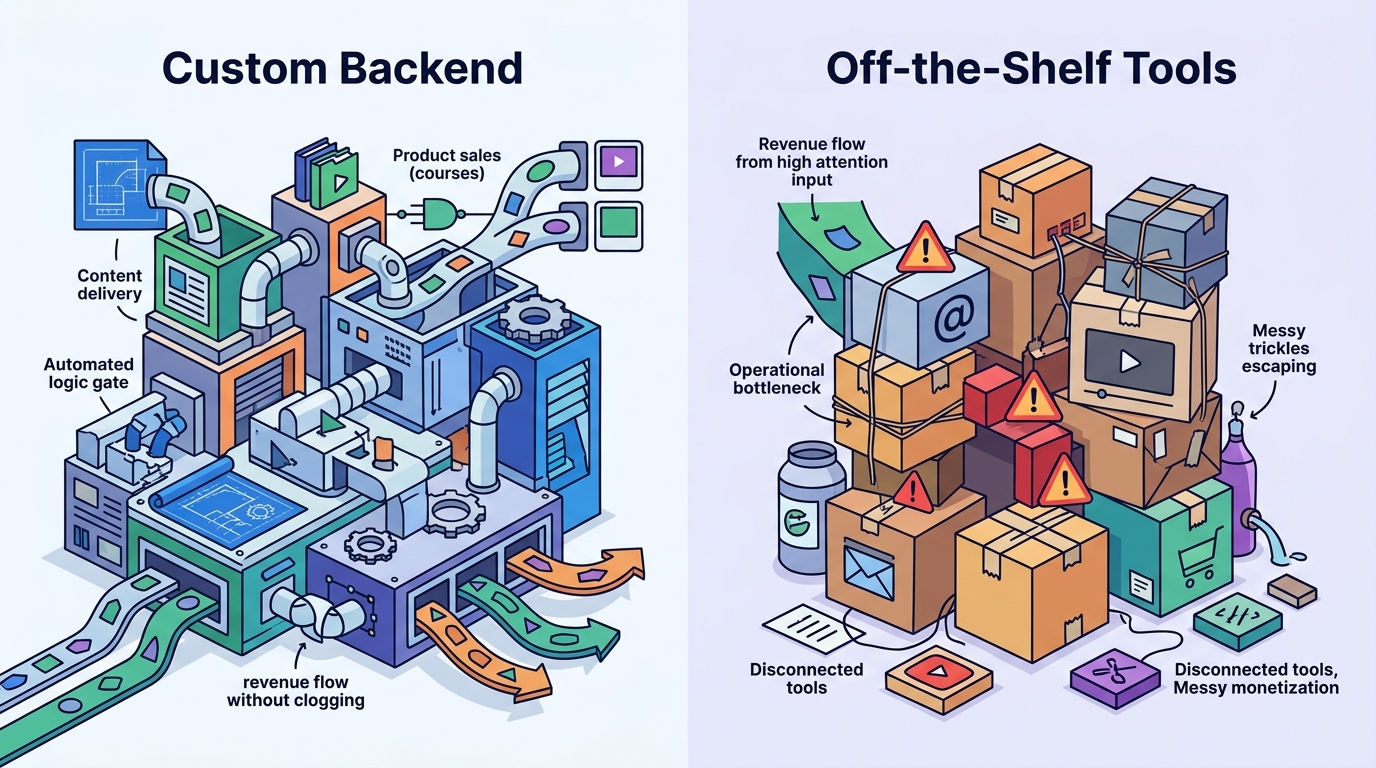
Most creators do not have a content problem. They have a systems problem. According to industry analysis on creator economy infrastructure, creators building serious brands often face operational bottlenecks that stall revenue growth before they even reach the next tier. When attention is high but backend infrastructure is fragmented, monetization becomes messy. This article dissects the critical differences between building custom backend systems and relying on off-the-shelf tools, helping you decide which path aligns with your current scale and future ambitions.
The Core Difference: Flexibility vs. Speed
The fundamental distinction lies in control versus convenience. Off-the-shelf tools are designed for the average user, prioritizing rapid deployment and ease of use. Custom backend development is engineered for specific business logic, prioritizing scalability and unique operational requirements.
Custom backend development is the process of building software infrastructure from the ground up to meet specific business needs. This approach allows for precise control over data flow, security protocols, and user experience. Conversely, off-the-shelf solutions are pre-built software packages that solve common problems but offer limited ability to deviate from their standard functionality.
For creators, this choice is not just technical; it is strategic. Using generic tools can lead to a "feature ceiling" where your platform cannot support your growing audience's expectations. Building custom systems requires more upfront investment but pays dividends in operational efficiency and brand differentiation.
Off-the-Shelf Tools: The Speed Advantage
Off-the-shelf tools, such as standard CRM platforms, generic e-commerce plugins, or widely available project management software, offer immediate utility. They are ideal for creators in the early stages of building their brand, where speed to market is critical.
Pros of Off-the-Shelf Solutions
- Rapid Deployment: You can set up workflows in hours, not months. This allows you to start monetizing your audience immediately without waiting for development cycles.
- Lower Initial Cost: Subscription-based models keep upfront capital expenditure low. This is financially prudent for new businesses with limited cash flow.
- Community Support: Popular tools have large user communities and extensive documentation. If you encounter an error, solutions are likely already available online.
Cons of Off-the-Shelf Solutions
However, these tools come with significant limitations. As your brand grows, you may find that these platforms cannot handle complex data relationships or unique user journeys. According to Gartner's analysis on low-code and no-code platforms, while these tools accelerate initial development, they often create technical debt that hinders long-term scalability.
Additionally, you are at the mercy of the vendor's roadmap. If a feature you need is not prioritized by the vendor, you are stuck. Furthermore, data portability can be a major issue. Migrating away from a proprietary ecosystem can be costly and technically challenging, effectively locking you into their platform.
Custom Backend Development: The Scale Advantage
Custom backend development involves creating tailored digital infrastructure that aligns perfectly with your brand's unique operational needs. This is the path for creators who have outgrown the limitations of generic tools and are ready to build a serious, scalable brand.
Pros of Custom Systems
- Complete Control: You dictate every aspect of the user experience, from data storage to payment processing. This ensures your brand identity is preserved throughout the customer journey.
- Scalability: Custom systems are built to grow with you. You can optimize database queries, server architecture, and API integrations to handle millions of visitors without performance degradation.
- Competitive Advantage: Unique features that cannot be replicated by competitors using standard tools become your moat. This differentiation is crucial in saturated markets.
Cons of Custom Systems
The drawbacks are primarily related to resource intensity. Custom development requires significant upfront time and financial investment. You also need ongoing maintenance and security updates, which demand dedicated technical resources or a trusted partner.
Backend operations setup is not a one-time task but a continuous process of optimization. According to Forbes Tech Council reports on strategic software assets, companies that invest in custom infrastructure see a higher return on investment over time due to reduced licensing fees and increased operational efficiency.
Another critical factor is security. With custom systems, you are responsible for data protection compliance. This requires rigorous adherence to standards such as GDPR or CCPA, which can be complex to implement without expert guidance.
Comparison Matrix
The following table summarizes the key differences to help you evaluate your options based on your current business stage.
| Feature | Off-the-Shelf Tools | Custom Backend Development |
|---|---|---|
| Time to Market | Days to Weeks | Months to Quarters |
| Initial Cost | Low (Subscription) | High (Development) |
| Scalability | Limited by Vendor | Unlimited (Architectural) |
| Customization | Low to Medium | Complete Control |
| Maintenance | Handled by Vendor | Internal or Partner Managed |
| Data Ownership | Shared/Restricted | 100% Yours |
Key Takeaways
- Speed vs. Control: Off-the-shelf tools offer speed, while custom backends offer control. Choose based on your immediate needs versus long-term goals.
- Scalability Limits: Generic tools often hit a ceiling where they can no longer support complex user journeys or high traffic volumes.
- Brand Differentiation: Custom systems allow for unique features that competitors cannot easily replicate, strengthening your brand position.
- Cost Structure: Off-the-shelf tools have low upfront costs but recurring fees. Custom development has high upfront costs but potentially lower long-term operational expenses.
- Data Ownership: With custom backends, you retain full ownership of your data, which is critical for privacy compliance and future monetization strategies.
- Operational Efficiency: Tailored workflows reduce manual tasks and errors, leading to smoother operations as your team grows.
- Strategic Alignment: Your technical choice should align with your brand's vision. If you aim to build a serious brand, your infrastructure must support that ambition.
Frequently Asked Questions
When should I switch from off-the-shelf tools to custom development?
You should consider switching when you experience consistent limitations with your current tools, such as inability to customize user flows, high monthly costs due to scaling, or security concerns. If your revenue growth is being stifled by technical constraints, it is time to build.
Is custom backend development too expensive for small creators?
While the initial investment is higher, custom development can be more cost-effective in the long run. It eliminates recurring subscription fees for multiple tools and reduces the need for manual workarounds. Many creators start with a hybrid approach, using custom solutions for core monetization while keeping secondary functions on simpler platforms.
Can I migrate from off-the-shelf tools to a custom backend later?
Yes, migration is possible but can be complex. It requires careful data mapping and planning to ensure no information is lost. It is often more efficient to plan for scalability from the beginning, but many successful brands have made the transition after reaching a certain scale.
What are the security risks of off-the-shelf tools?
Off-the-shelf tools are popular targets for hackers due to their widespread use. While reputable vendors invest heavily in security, you are still reliant on their protocols. Custom backends allow you to implement specific security measures tailored to your data sensitivity, though they require diligent maintenance.
How does custom development impact user experience?
Custom development allows for a seamless, branded user experience that off-the-shelf tools cannot match. You can optimize load times, personalize content delivery, and create unique interaction patterns that enhance customer satisfaction and loyalty.
Do I need a technical team to manage a custom backend?
Not necessarily. You can partner with a specialized agency that handles the development, deployment, and ongoing maintenance. This allows you to focus on content and community while experts manage the infrastructure.
What is the typical timeline for building a custom backend?
Timelines vary based on complexity. A basic monetization system might take 8-12 weeks, while a complex platform with multiple integrations could take 6 months or more. Proper planning and clear requirements are essential to staying on schedule.
Next Steps for Your Brand
If you are struggling with scattered tools, weak product infrastructure, or inconsistent operations, it may be time to reevaluate your backend strategy. At BlackTierOps, we help creators organize, monetize, and scale through clean digital infrastructure. We structure your offers, digital products, and monetization flow into one cohesive engine.
Do not let operational chaos hold back your brand's potential. Request a Creator Brand Audit today to discover how custom backend systems can transform your business from chaotic to cohesive. Start your build with a partner who understands the unique challenges of creator economy infrastructure.