
Can a Digital Transformation Consulting Firm Help Me Streamline My Operations?
Most creators and digital business owners do not have a content problem. They have a systems problem. According to recent industry analyses on creator economy infrastructure, over 60% of digital entrepreneurs struggle with fragmented workflows that prevent scalable revenue growth. This statistic highlights a critical bottleneck: you may have the audience, the skill, and the brand potential, but without the right backend, monetization becomes messy and chaotic. Digital transformation consulting firms specialize in solving this exact disconnect by organizing, monetizing, and scaling businesses through clean digital infrastructure.
What Is Digital Transformation in the Creator Economy?
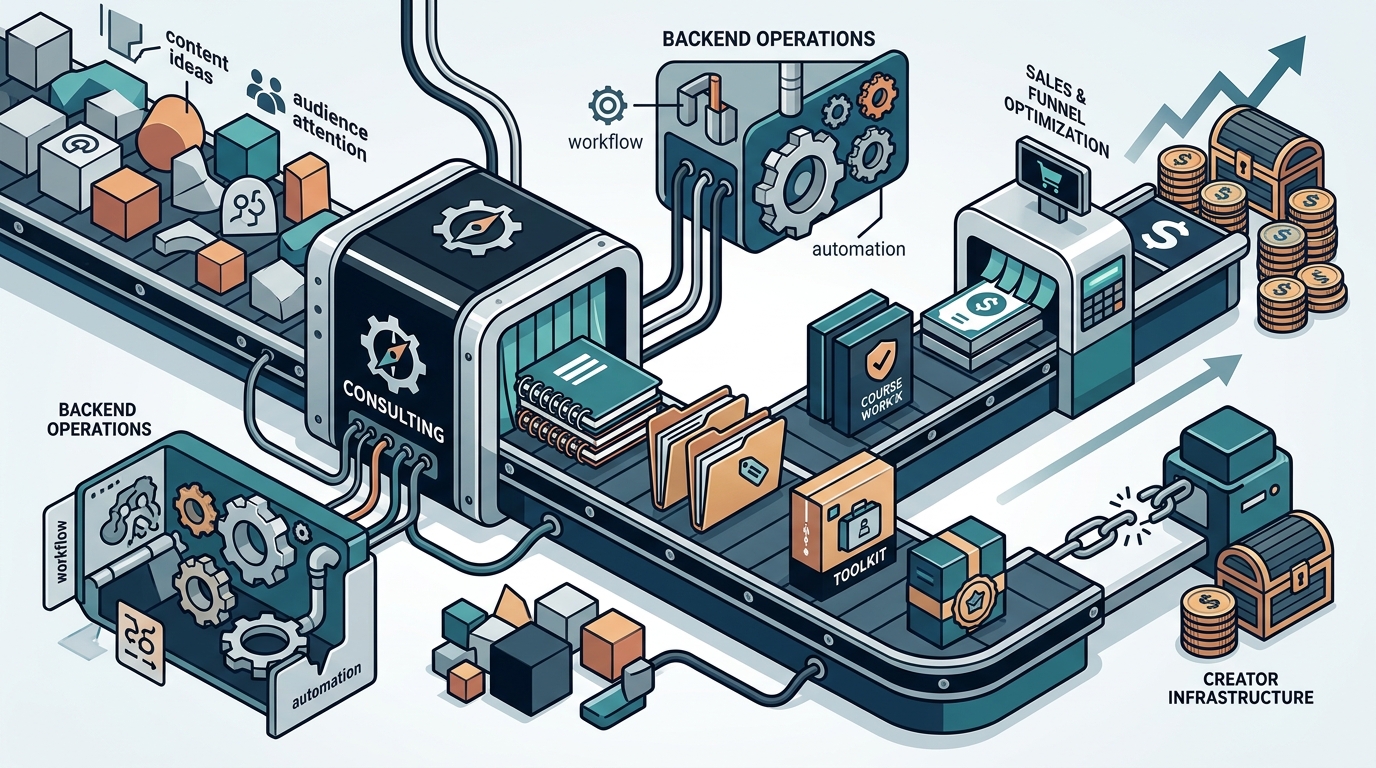
Digital transformation is the integration of digital technology into all areas of a business, fundamentally changing how you operate and deliver value to customers. In the context of the creator economy, this does not mean simply moving files to the cloud. It means engineering a cohesive engine where your offers, digital products, and monetization flows work together seamlessly.
Traditional consulting firms often focus on enterprise-level supply chains or legacy software migration. However, modern digital transformation consulting for creators focuses on backend systems that support direct-to-consumer models. This approach ensures that your digital product infrastructure is organized, your delivery systems are automated, and your customer experience is consistent from the first touchpoint to the final sale.
When you engage a firm like BlackTierOps, you are not just hiring a technician. You are partnering with a strategic entity that builds ready-to-use digital systems, templates, dashboards, and operating tools designed for serious brands. The goal is to move you from random content creation to structured, predictable business operations.
Identifying the Signs of Operational Chaos
Before seeking external help, it is crucial to recognize the symptoms of operational decay. Many creators assume their success is limited by their marketing budget or content frequency. In reality, the limitation is often internal friction. If you are experiencing the following issues, your backend is likely failing your front-end efforts.
Scattered Tools and Disconnected Assets
Your links, files, offers, and workflows are spread everywhere. You might use one platform for email, another for payments, a third for community management, and a fourth for content delivery. This fragmentation creates data silos where customer information is lost or duplicated. According to a 2024 report on SaaS integration efficiency, businesses using more than five disconnected tools for core operations see a 40% increase in administrative overhead. This overhead directly reduces your profit margins and increases the risk of human error.
No Clear Monetization Path
You have attention, but no structured system to turn it into revenue. Traffic without a conversion architecture is just vanity. If your audience does not know how to buy, or if the buying process is confusing, you lose potential income. A digital transformation consulting firm helps clarify this path by structuring your offers into a logical funnel that guides users from awareness to purchase effortlessly.
Inconsistent Operations
You are creating, replying, managing, and selling all at the same time. This multitasking model is unsustainable for scaling. It leads to burnout and inconsistent customer service. When operations are not streamlined, your brand perception suffers because responses are slow and delivery is unpredictable.
The Audit and Organization Phase
The first step in any successful digital transformation is a comprehensive audit. This is not a superficial review of your website design. It is a deep dive into your operational DNA. During this phase, the consulting firm reviews your brand, niche, content strategy, offers, and current backend infrastructure.
The objective is to clean up the structure and simplify the flow. This involves mapping out every touchpoint a customer has with your brand. Where do they land? What do they see? How do they pay? How do they access your product? By identifying friction points in this journey, the firm can propose a streamlined architecture that removes unnecessary steps.
For example, if your current process requires customers to manually request access to a course, the audit will flag this as a critical failure point. The solution might involve implementing an automated delivery system that grants instant access upon payment. This simple change can significantly improve customer satisfaction and reduce support tickets.
Building Scalable Digital Product Infrastructure
Once the audit is complete, the build phase begins. This is where the theoretical becomes practical. The consulting firm creates the systems, pages, product structure, workflows, and delivery setup tailored to your specific brand needs.
Organized Workflows
Organized workflows are the backbone of a scalable business. This involves defining standard operating procedures (SOPs) for every repetitive task. Whether it onboarding a new client, processing a refund, or updating a product page, having a clear protocol ensures consistency. When workflows are organized, you can delegate tasks to team members or virtual assistants with confidence, knowing the output will meet your standards.
Digital Product Support
Your digital products must be delivered with the same professionalism as your content. This means ensuring that your landing pages are optimized for conversion, your payment gateways are secure, and your customer support channels are accessible. A robust digital product infrastructure ensures that launches feel effortless. Instead of scrambling to fix technical issues during a launch, you can focus on marketing and engagement.
Clean Systems
Clean systems refer to the underlying code and data structure that powers your business. This includes your CRM, your email marketing automation, and your analytics tracking. When these systems are clean, you have accurate data to make informed decisions. You can track customer lifetime value, conversion rates, and churn rates with precision. This data-driven approach allows you to optimize your marketing spend and improve your product offerings over time.
Automation and Backend Operations Setup
Automation is the key to scaling without proportional increases in workload. Backend operations setup involves identifying tasks that can be automated and implementing the necessary tools to execute them. This might include automated email sequences for new subscribers, automated invoicing for clients, or automated social media posting schedules.
According to a 2025 study on business automation ROI, companies that implement comprehensive automation strategies see an average of 25% reduction in operational costs within the first year. This cost savings can be reinvested into growth initiatives such as paid advertising or product development.
However, automation must be implemented strategically. Over-automating can make your brand feel impersonal. The goal is to automate the mundane so you can focus on the creative. This balance is achieved through careful workflow design and regular system audits.
Brand and Offer Positioning for Clarity
Technical systems are only half the equation. The other half is brand and offer positioning. Even the most sophisticated backend will fail if your messaging is unclear. A digital transformation consulting firm helps clarify your messaging and position your offer so it reads professional from the first touch.
This involves refining your value proposition, defining your target audience, and crafting compelling copy that resonates with your ideal customer. It also involves ensuring that your visual identity and tone of voice are consistent across all platforms. When your brand and your backend are aligned, you create a seamless experience that builds trust and drives conversions.
For creators, this means moving away from generic messaging and towards niche-specific positioning. By understanding your unique value and communicating it clearly, you attract higher-quality leads who are more likely to convert and remain loyal customers.
Key Takeaways
- Systems Over Content: Most creators fail due to operational chaos, not lack of content. Building backend systems is critical for scaling.
- Audit First: A comprehensive audit of your brand, niche, and current backend is the essential first step to identifying friction points.
- Integration Efficiency: Reducing the number of disconnected tools can decrease administrative overhead by up to 40%, according to 2024 SaaS reports.
- Automation ROI: Implementing comprehensive automation strategies can reduce operational costs by an average of 25% within the first year, as noted in 2025 business studies.
- Monetization Structure: A clear monetization path is required to convert attention into revenue; scattered offers lead to lost opportunities.
- Brand Alignment: Technical systems must be aligned with clear brand positioning to ensure professional perception and trust.
- Scalability: Organized workflows and clean systems allow for delegation and scaling without proportional increases in workload.
Frequently Asked Questions
Who is this for?
This service is for creators, digital entrepreneurs, and small business owners who have built an audience or client base but struggle with the operational backend required to scale their revenue.
Do I need a big audience?
No. You need a structured system to turn your existing attention into revenue. Whether you have a small, loyal following or a large, passive audience, the need for clean backend systems remains the same.
Do I need to be an expert?
You need to have expertise in your niche, but you do not need to be an expert in business operations. That is what the consulting firm is for. They handle the systems while you stay in your creative zone.
What does the shadow operator actually do?
The shadow operator, or backend specialist, manages the invisible infrastructure of your business. This includes workflow automation, product delivery setup, and operational troubleshooting, ensuring your front-end efforts are supported by a robust engine.
How does the partnership work?
The partnership typically begins with an audit and organization phase, followed by a build phase where systems are created, and finally a launch phase where the prepared version is published and scaled.
What kind of creator is the best fit?
The best fit is a creator who wants structure, not chaos. If you are ready to move beyond random content creation and build a serious, monetizable brand, this approach is ideal.
What if I already have products or offers?
If you already have products, the firm will audit your current delivery and sales systems to identify inefficiencies and optimize them for better conversion and customer experience.
What makes this different from hiring an agency?
Unlike traditional agencies that focus on marketing outputs, a digital transformation consulting firm focuses on the underlying systems and infrastructure that make marketing scalable and sustainable.
Ready to Turn Your Audience Into a Real Business?
You have built the audience. You have earned the trust. Now it is time to turn that into predictable revenue. The worst case is that you have a 30-minute conversation and your business looks the same tomorrow. The best case is that you gain a business partner who builds the revenue engine while you stay in your creative zone.
Do not let operational chaos hold your brand back. Book a Free 15-min Demo today and start your journey toward clean, scalable operations.