
Most creators do not have a content problem. They have a systems problem. You may have the audience, the skill, and the brand potential, but without the right backend, monetization becomes messy. According to industry analysis on creator economy infrastructure, the creator economy is projected to reach $250 billion by 2027, driven largely by scalable digital product delivery. This growth highlights a critical gap: attention without structured systems fails to convert into predictable revenue. This guide details how to organize, build, and launch automated delivery engines that remove operational chaos. (BlackTierOps Backend systems for)
Defining Automated Product Delivery
Before selecting tools, you must understand the architecture of digital fulfillment. Digital product infrastructure is the organized system of delivery, assets, and customer experience that ensures launches feel effortless. Without this, you are manually managing files, emails, and access keys, which scales poorly.
Backend operations setup refers to the streamlining of workflows, automations, and tools to remove operational chaos. When these systems are disconnected, your delivery becomes inconsistent. A unified backend ensures that every customer interaction follows a predictable path from payment to access.
According to data on digital commerce efficiency, digital product sales have grown by over 300% in the last decade, yet many creators still rely on manual spreadsheets. This manual approach creates bottlenecks. You need a system that handles the transaction, the delivery, and the follow-up without your direct intervention.
Core Infrastructure Components
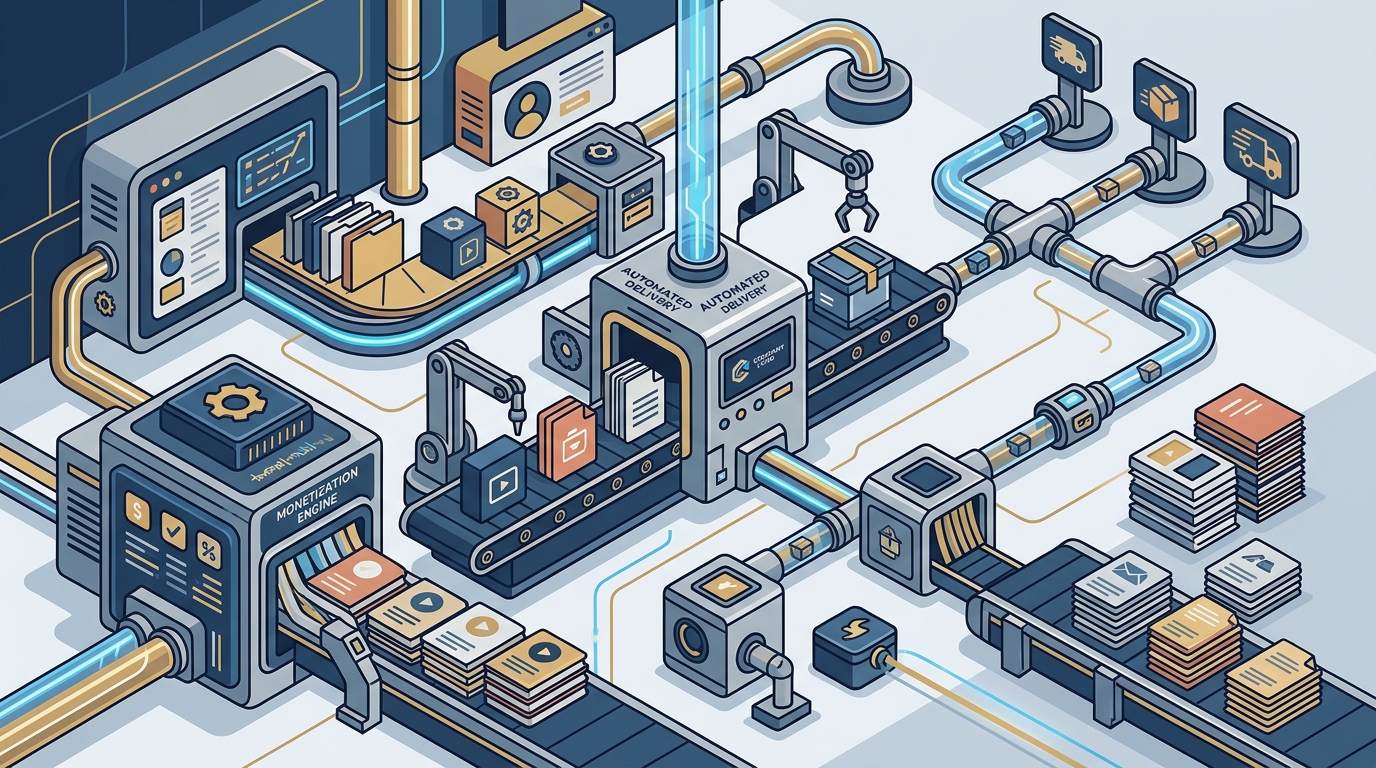
Effective automation requires three distinct layers. Each layer serves a specific function in the creator economy ecosystem.
1. The Payment Gateway
This is the entry point. It must handle secure transactions and tax compliance. Tools like Stripe or PayPal are standard, but they require a frontend to trigger them. The gateway alone does not deliver products. It only processes the money.
2. The Delivery Engine
This is where the product lives. Whether it is a PDF, a video course, or a software license, the delivery engine must securely host the asset and grant access upon payment confirmation. Creator monetization systems structure these offers into a cohesive engine. This layer ensures that the customer receives exactly what they paid for, instantly.
3. The Communication Layer
Automation is incomplete without follow-up. The communication layer sends onboarding emails, access links, and upsell offers. According to research on email marketing ROI, email marketing generates $42 for every $1 spent. This layer turns a one-time buyer into a long-term customer.
Platform Selection Matrix
Choosing the right platform depends on your product type and technical comfort. Below is a comparison of common approaches.
| Platform Type | Best For | Automation Level | Pros | Cons |
|---|---|---|---|---|
| All-in-One Platforms | Course creators, Coaches | High | Simple setup, built-in email | Less flexible, higher fees |
| Headless Commerce | Developers, Custom Brands | Medium | Full control, lower costs | Requires technical setup |
| Automation Stacks | Advanced Creators | Very High | Best-in-class tools, scalable | Complex integration |
According to a report on SaaS adoption among freelancers, over 60% of digital businesses now use automated workflows to reduce manual entry errors. This shift indicates that manual delivery is no longer competitive. You must choose a stack that aligns with your growth trajectory.
Workflow Automation Strategies
Automation is not just about tools. It is about logic. You must map the customer journey before building the system.
Trigger-Based Actions
Every automation starts with a trigger. Common triggers include "New Payment Completed" or "Form Submitted." When this event occurs, the system must immediately execute a sequence of actions. For example, a payment trigger should instantly generate a download link and send a welcome email.
Conditional Logic
Not all customers are the same. Conditional logic allows you to branch the workflow based on user behavior. If a customer buys Product A, they receive Email Sequence X. If they buy Product B, they receive Email Sequence Y. This personalization increases engagement. According to data on customer experience, personalized experiences increase purchase likelihood by 20%.
Recurring Revenue Models
For subscription-based products, automation handles renewals and access management. This requires robust backend systems that sync payment status with user access levels. Brand & offer positioning relies on this consistency. If a subscriber loses access due to a billing error, your brand credibility suffers.
Integration & Data Flow
The most effective delivery systems are integrated. Data should flow seamlessly between your payment processor, your delivery platform, and your CRM. Disconnected tools create data silos. You might know who paid, but not who opened the email or who needs support.
According to industry benchmarks on operational efficiency, the creator economy is expected to grow by 25% annually through 2027. To capture this growth, you need a system that scales. Manual processes break under volume. Integrated systems handle thousands of transactions without additional labor.
At BlackTierOps, we specialize in building these exact systems. We help creators organize, monetize, and scale through clean digital infrastructure. Our process involves auditing your current backend, building tailored workflows, and launching a scalable engine. View our systems to see how we structure offers for maximum efficiency.
Key Takeaways
- Systems Over Content: Most creators fail due to operational chaos, not lack of content. Clean backend systems are the differentiator.
- Automation Layers: Effective delivery requires three layers: payment processing, asset delivery, and automated communication.
- Platform Choice: All-in-one platforms offer simplicity, while headless stacks offer flexibility. Choose based on technical capacity.
- Conditional Logic: Branching workflows based on purchase behavior increases engagement and revenue per customer.
- Integration is Critical: Data silos kill scalability. Ensure your tools communicate via APIs or native integrations.
- Scalability: Automated systems handle volume without linear cost increases, essential for the growing creator economy.
- Brand Trust: Consistent, error-free delivery builds long-term customer trust and repeat purchases.
Frequently Asked Questions
What is the best tool for automating digital product delivery?
There is no single "best" tool. The right choice depends on your product type. For courses, platforms like Kajabi or Teachable are effective. For digital downloads, Gumroad or Lemon Squeezy are popular. For custom needs, a headless stack using Stripe and Zapier offers maximum flexibility.
How do I automate email follow-ups after a purchase?
You can use automation platforms like Zapier, Make, or native integrations within your payment processor. Set a trigger for "New Sale" and connect it to your email service provider (ESP) to send a predefined sequence of onboarding emails.
Can I automate delivery for subscription-based products?
Yes. Subscription automation requires syncing payment status with user access. Tools like Memberful or Substack handle this natively. For custom builds, you must use webhooks to update user roles in your database when a payment succeeds or fails.
What is the difference between a payment gateway and a delivery engine?
A payment gateway processes the transaction and handles security. A delivery engine hosts the product and grants access. They are distinct functions that must work together to complete the customer journey.
How does automation improve brand positioning?
Automation ensures consistency. Every customer receives the same professional onboarding experience, regardless of when they buy. This reliability reinforces brand trust and reduces support queries.
Do I need technical skills to set up automated delivery?
Not necessarily. Many all-in-one platforms require no coding. However, for complex workflows or custom branding, technical skills or a partner like BlackTierOps are beneficial. View our process to see how we build tailored systems.
What are the risks of relying on a single platform?
Platform dependency can be risky. If a platform changes its fees or shuts down, your business is vulnerable. A diversified stack or headless architecture reduces this risk by keeping your data and customer relationships under your control.
Start Your Build
You have built the audience. You have earned the trust. Now it is time to turn that into predictable revenue. The worst case is a 30-minute conversation where your business looks the same. The best case is gaining a business partner who builds the revenue engine while you stay in your creative zone.
BlackTierOps builds ready-to-use digital systems, templates, dashboards, and operating tools designed for creators and digital businesses ready to move beyond random content. We organize workflows, provide digital product support, and ensure clean systems for premium positioning.
Request Your Creator Brand Audit today. No commitment. Just clarity. Let us help you structure your offers and streamline your backend operations.