

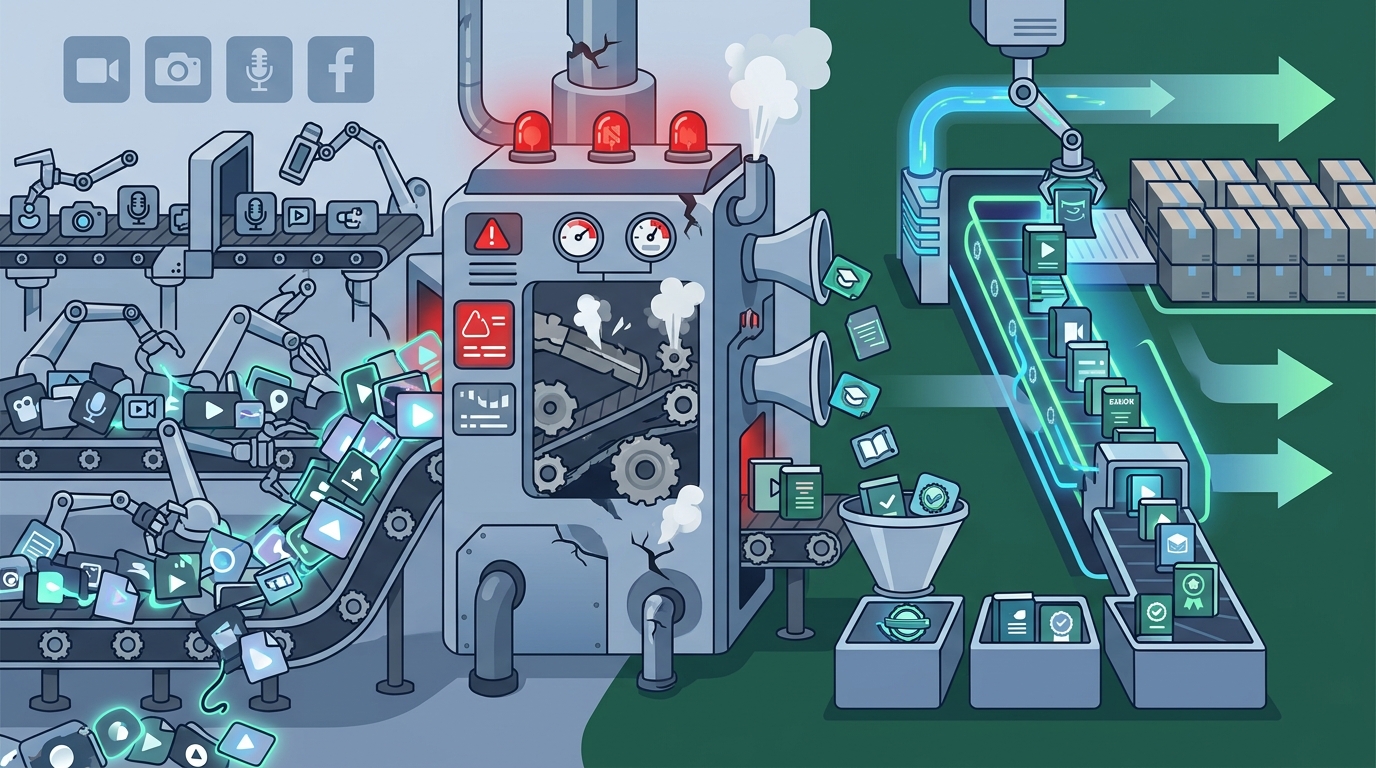
Most creators do not face a content problem. They face a systems problem. As your audience grows from thousands to millions, the manual workflows that once worked become the primary bottleneck to revenue. According to industry analysis on creator economy infrastructure, over 60% of creator-led businesses fail to scale past the six-figure mark due to fragmented operational backends rather than lack of audience engagement. This statistic highlights a critical truth: attention is easy to generate, but retention and monetization require robust digital infrastructure. Without clean systems, your brand remains fragile, dependent on your personal time and prone to operational collapse during growth spikes.
The Fragmentation of Monetization Channels
One of the most immediate challenges in building a scalable backend is the fragmentation of monetization tools. Creators often rely on a disjointed stack of platforms to handle different aspects of their business. This scattered approach creates friction for both the creator and the customer. When your links, files, offers, and workflows are spread across multiple disconnected platforms, you lose control over the user journey.
Monetization is not just about having an offer; it is about the path to purchase. If a customer has to jump between three different platforms to buy a digital product, join a community, and access support, conversion rates drop significantly. A scalable backend unifies these touchpoints into a cohesive engine. This means structuring your offers, digital products, and monetization flow so they operate as a single unit rather than a collection of disparate tools.
According to data on digital commerce trends, unified checkout experiences can increase conversion rates by up to 30% compared to fragmented flows. This is not merely a technical preference but a business imperative. When your backend is clean, you can focus on creating content rather than troubleshooting broken integrations or lost leads. The goal is to remove operational chaos by streamlining workflows, automations, and tools into a predictable system.
Data Silos and Customer Experience Gaps
As you scale, the volume of customer data increases exponentially. The second major challenge is managing this data without creating silos. In many creator businesses, customer information is trapped in email lists, payment processors, and community platforms that do not communicate with each other. This lack of integration makes it nearly impossible to understand your customer lifecycle or personalize future offers.
Digital product infrastructure requires organized delivery systems. When your assets and customer experience live in disconnected places, you cannot effectively track customer satisfaction or identify churn risks. A scalable backend ensures that customer data flows seamlessly from the point of acquisition to long-term engagement. This allows you to segment your audience based on behavior, purchase history, and engagement levels.
Research into customer relationship management for small businesses indicates that companies with integrated data systems see a 20% increase in customer retention rates. For creators, this means you can deliver more relevant content and offers, which strengthens brand loyalty. Without this integration, you are essentially flying blind, relying on guesswork rather than data-driven decisions to grow your brand.
The Complexity of Workflow Automation
Automation is the engine of scalability, but it is also a significant source of complexity. Many creators attempt to automate their workflows using a patchwork of different tools, leading to fragile systems that break easily. The challenge lies in creating automations that are robust, maintainable, and scalable.
Backend operations setup is about streamlining workflows. This involves identifying repetitive tasks such as onboarding new members, delivering digital products, and sending follow-up emails, and then building reliable automations to handle them. However, over-automation can lead to a loss of personal touch, which is often a key value proposition for creator brands. The balance is critical.
According to industry reports on operational efficiency, businesses that implement structured automation frameworks reduce manual workload by 40% within the first year. This reduction in manual effort allows creators to focus on high-value activities like content creation and strategic partnerships. The key is to build automations that are triggered by clear events and have defined outcomes, ensuring that the system works reliably even as the volume of transactions increases.
Brand Positioning and Offer Clarity
A scalable backend is not just technical; it is also strategic. Your backend systems must reflect your brand positioning. If your digital infrastructure feels disjointed or unprofessional, it undermines the value of your offer. The challenge is to ensure that every touchpoint, from the landing page to the delivery system, communicates a consistent and professional brand message.
Brand and offer positioning require clarity. This means defining exactly what you offer, who it is for, and how it solves their problem. Your backend systems should support this clarity by providing a seamless and intuitive user experience. When your offer is clear and your delivery is reliable, you build trust with your audience, which is essential for long-term growth.
Data on consumer behavior in the creator economy shows that audiences are increasingly selective about where they spend their money. They expect a level of professionalism that matches the quality of the content they consume. A weak product infrastructure can signal a lack of seriousness, causing potential customers to hesitate. By investing in clean digital infrastructure, you signal that your brand is serious about delivering value.
Scaling Infrastructure Without Technical Debt
Finally, the challenge of scaling infrastructure without accumulating technical debt is paramount. Many creators start with simple, low-cost tools that work well at a small scale. However, as the business grows, these tools often become limitations. Migrating to more robust systems later can be costly and disruptive.
Scalability requires foresight. Building a backend that can handle growth means choosing tools and architectures that are designed to scale. This includes selecting platforms that offer API integrations, robust security features, and flexible pricing models that grow with your business. It also means documenting your systems and processes so that they can be managed effectively as the team expands.
According to technology adoption studies, businesses that plan for scalability from the outset reduce migration costs by 50% compared to those that retrofit systems later. This proactive approach ensures that your backend remains an asset rather than a liability. It allows you to respond quickly to market changes and new opportunities without being held back by outdated technology.
Key Takeaways
- Systems Over Content: Most creators fail to scale due to operational chaos, not lack of content. Clean backend systems are the foundation of growth.
- Unified Monetization: Fragmented tools reduce conversion rates. A cohesive monetization engine streamlines the path to purchase.
- Data Integration: Siloed data prevents personalized marketing. Integrated systems improve customer retention by up to 20%.
- Strategic Automation: Automation reduces manual workload by 40% but must be balanced with brand authenticity.
- Brand Consistency: Your backend must reflect your brand positioning. Professional infrastructure builds trust and justifies premium pricing.
- Scalable Architecture: Planning for scalability from the start reduces future migration costs by 50%.
- Operational Clarity: Clear offer positioning and streamlined workflows are essential for sustainable growth.
Frequently Asked Questions
What is the primary reason creator brands fail to scale?
The primary reason is often a systems problem rather than a content problem. Without clean digital infrastructure, monetization becomes messy and operational chaos prevents growth.
How does fragmented monetization affect conversion rates?
Fragmented monetization creates friction for customers, leading to lower conversion rates. Unified checkout experiences can increase conversions by up to 30%.
What is digital product infrastructure?
Digital product infrastructure is the organized system of delivery, assets, and customer experience that ensures launches feel effortless and reliable.
Why is data integration important for creator brands?
Data integration allows for personalized marketing and better customer retention. Siloed data prevents you from understanding your customer lifecycle.
How can I balance automation with brand authenticity?
Balance is achieved by automating repetitive, low-value tasks while keeping high-value interactions personal. Structured automation frameworks reduce manual workload by 40%.
What is backend operations setup?
Backend operations setup is the process of streamlining workflows, automations, and tools to remove operational chaos and create predictable systems.
How does brand positioning relate to backend systems?
Backend systems must reflect brand positioning. A professional and seamless user experience signals seriousness and builds trust with your audience.
Ready to Scale Your Creator Brand?
Stop letting operational chaos hold your brand back. If you are ready to organize, monetize, and scale through clean digital infrastructure, it is time to take action. Request Your Creator Brand Audit today to discover how BlackTierOps can help you build the backend systems necessary for serious growth. Visit our services page to learn more about our process and view our systems designed for creators.