
Most creators do not have a content problem. They have a systems problem. According to industry analysis on creator economy infrastructure, creators building serious brands often face operational chaos when relying solely on disconnected tools. This fragmentation leads to weak product infrastructure and inconsistent operations. As your audience grows, the gap between attention and revenue widens unless you implement clean digital infrastructure. This guide examines the critical differences between custom backend development and off-the-shelf tools to help you choose the right path for scaling. (BlackTierOps Backend systems for)
Why Custom Backend Matters for Creators
Custom backend development refers to the process of building tailored software solutions specifically designed to meet the unique operational needs of a business. For creators, this means moving away from generic templates toward systems that align with your specific monetization flow. Forbes reports on the necessity of custom software for businesses aiming to scale beyond initial growth phases.
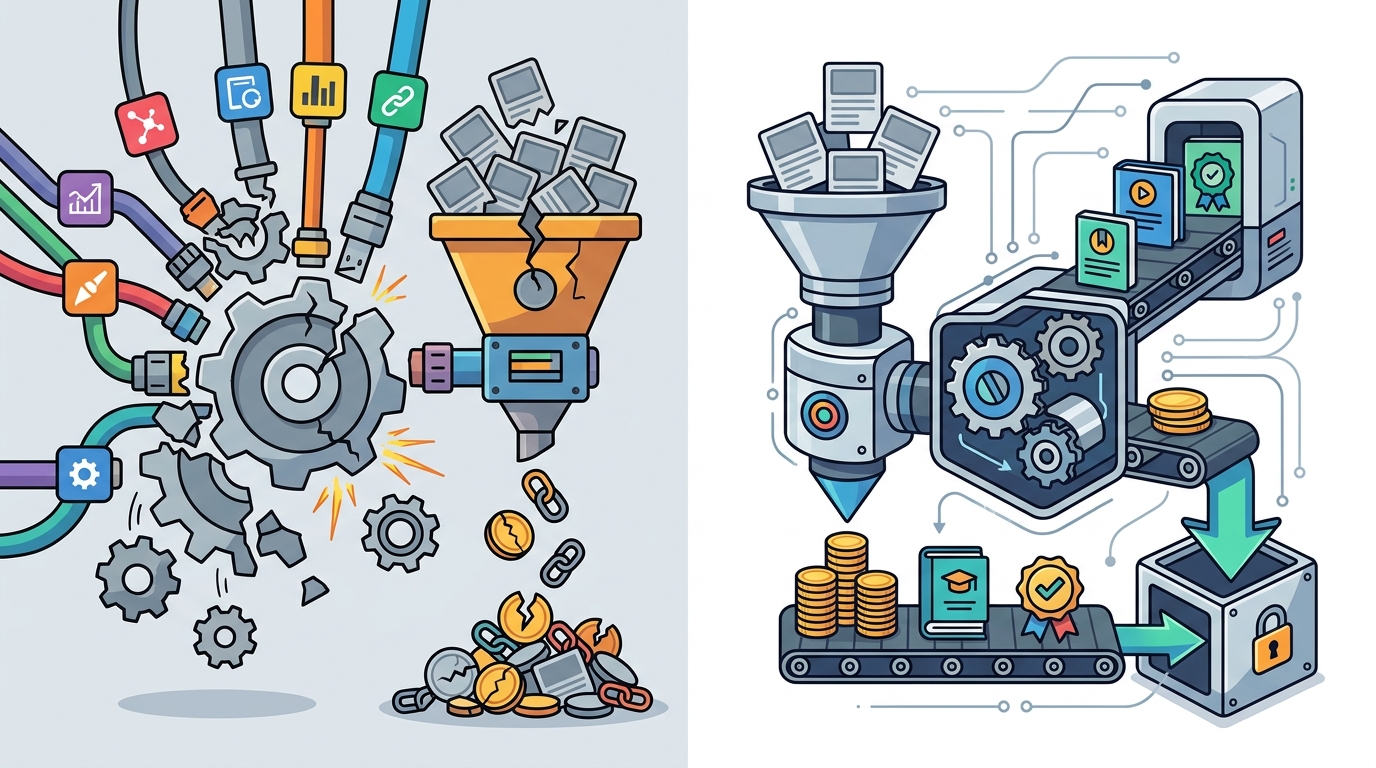
When you rely on scattered tools, your links, files, offers, and workflows become spread everywhere. This lack of cohesion creates a weak product infrastructure. Your delivery systems, assets, and customer experience live in disconnected places. This fragmentation forces you to create, reply, manage, and sell all at the same time. The result is inconsistent operations that frustrate your audience and drain your time.
Custom backend systems provide a clear monetization path. They structure your offers, digital products, and monetization flow into one cohesive engine. This approach ensures that every touchpoint reads professional from the first interaction. It transforms your brand from a hobbyist project into a serious business entity.
The Limitations of Off-the-Shelf Tools
Off-the-shelf tools are pre-built software applications designed for a broad audience. While they offer quick setup, they often fail to address the specific nuances of creator economies. Gartner defines SaaS limitations in contexts where specialized workflows are required. Generic tools force you to adapt your business to their constraints, rather than the other way around.
The Integration Trap
One of the primary issues with off-the-shelf tools is the integration trap. You may use one platform for email, another for payments, and a third for content delivery. Each tool requires its own login, support channel, and update cycle. This complexity increases the risk of data silos. Your customer data becomes fragmented, making it difficult to gain a holistic view of your audience.
Scalability Barriers
As your revenue grows, off-the-shelf tools often hit hard limits. Pricing tiers increase exponentially, and feature restrictions become more stringent. CB Insights highlights scaling challenges in the creator economy due to platform dependency. You may find yourself paying premium prices for features you only use occasionally, while missing critical functionality needed for advanced automation.
Lack of Brand Control
Off-the-shelf solutions rarely allow for deep brand customization. Your checkout pages, email templates, and user interfaces often look identical to your competitors. This lack of differentiation weakens your brand positioning. In a crowded market, unique customer experiences are a key differentiator. Custom backend development allows you to clarify messaging and position your offer so it stands out.
Advantages of Custom Backend Development
Custom backend development offers unparalleled flexibility and control. It allows you to build systems that evolve with your brand. Here are the core advantages that set custom solutions apart from off-the-shelf alternatives.
Streamlined Workflows
Custom systems streamline your workflows, automations, and tools to remove operational chaos. You can design processes that match your exact creative and business rhythms. For example, you can automate the delivery of digital products immediately after purchase, without manual intervention. This efficiency reduces overhead and improves customer satisfaction.
Enhanced Security and Compliance
When you build your own backend, you control the security protocols. You can implement specific data protection measures that align with regional regulations. Investopedia explains the importance of data compliance for growing businesses. Off-the-shelf tools may not meet your specific compliance needs, leaving you vulnerable to legal risks.
Ownership and Asset Value
With custom development, you own the code and the infrastructure. This ownership increases the valuation of your business. If you ever decide to sell your brand or product line, a custom backend is a tangible asset. Off-the-shelf tools are rented services that disappear if you stop paying. McKinsey notes the value of owned digital assets in long-term business strategy.
Comparison: Custom vs Off-the-Shelf
The following table summarizes the key differences between custom backend development and off-the-shelf tools. This comparison helps you evaluate which option aligns with your current stage and future goals.
| Feature | Custom Backend Development | Off-the-Shelf Tools |
|---|---|---|
| Flexibility | Highly customizable to specific needs | Limited to pre-built features |
| Scalability | Designed to grow with your brand | Often hits pricing or feature caps |
| Integration | Seamless, unified ecosystem | Requires complex third-party connections |
| Cost Structure | Higher initial investment, lower long-term cost | Low initial cost, recurring subscription fees |
| Brand Control | Full control over user experience | Generic templates and interfaces |
| Maintenance | Managed by your team or partner | Handled by the vendor |
Key Takeaways
- Systems Over Content: Most creators fail not due to lack of content, but due to poor backend systems. Organizing your brand is the first step to scaling.
- Monetization Clarity: Custom backend systems structure your offers into a cohesive engine, turning attention into predictable revenue.
- Operational Efficiency: Streamlining workflows removes the chaos of managing multiple disconnected tools, allowing you to focus on creation.
- Brand Positioning: A professional, unified digital infrastructure clarifies your messaging and builds trust with your audience.
- Long-Term Value: Owning your code and infrastructure increases your business valuation and reduces dependency on third-party vendors.
- Scalability: Custom solutions are designed to grow with your brand, avoiding the limitations and cost spikes of off-the-shelf tiers.
Frequently Asked Questions
Is custom backend development too expensive for small creators?
While the initial investment is higher than off-the-shelf tools, custom development often saves money in the long run by eliminating recurring subscription fees and reducing operational inefficiencies. It is an investment in scalability.
Can I migrate from off-the-shelf tools to a custom backend later?
Yes, migration is possible but requires careful planning. It is often more efficient to build a custom backend from the start if you anticipate significant growth. BlackTierOps offers audits to help you plan this transition.
What is the difference between a CMS and a custom backend?
A CMS (Content Management System) is a type of off-the-shelf tool designed for content creation. A custom backend is tailored software that handles complex business logic, data processing, and user interactions specific to your brand.
How long does it take to build a custom backend?
Timeline varies based on complexity. A basic monetization system may take weeks, while a full-scale platform can take months. The process involves auditing, organizing, and building your specific needs.
Do I need technical skills to manage a custom backend?
Not necessarily. You can partner with a development team to manage the technical aspects. Your role is to define the business requirements and user experience goals.
What are the security benefits of a custom backend?
Custom backends allow you to implement specific security protocols tailored to your data needs. You are not reliant on the security measures of a generic vendor, reducing the risk of widespread data breaches.
How does custom backend improve customer experience?
It allows for seamless, personalized interactions. From checkout to delivery, every step can be optimized for your specific audience, leading to higher satisfaction and retention rates.
Next Steps for Your Brand
If you are ready to move from scattered tools to a cohesive system, it is time to audit your current operations. Request a Creator Brand Audit to identify the gaps in your infrastructure. We help creators organize, monetize, and scale through clean digital infrastructure. Start your build today and transform your brand into a serious business.